
National Nutrition Week 2026 in India: 1–7 September Date, Importance, Healthy Eating Tips & Awareness Messages
Published: 1 September 2026 | Updated: 1 September 2026 | Author: Brijesh Jangid
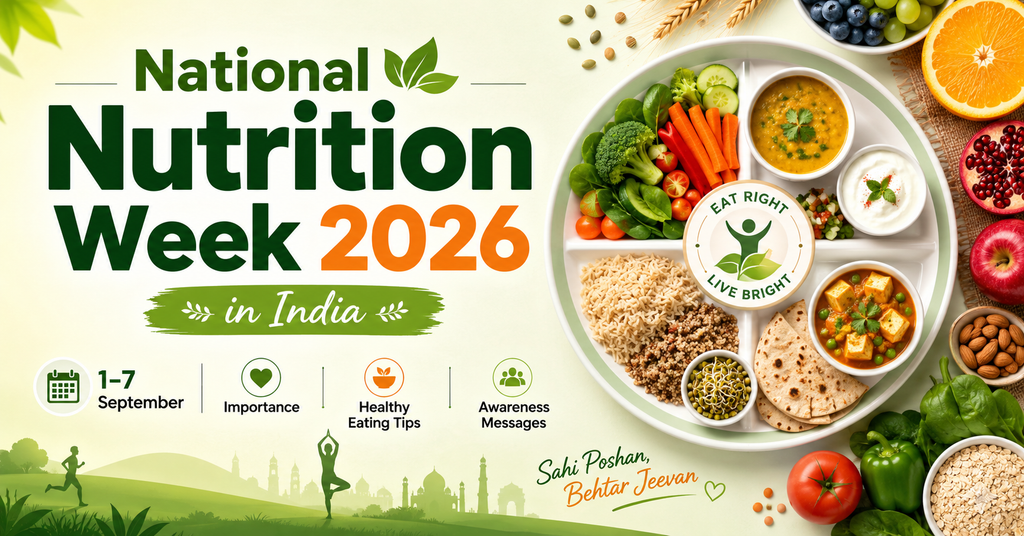
National Nutrition Week 2026 is a useful reminder that everyday food choices matter. In India, National Nutrition Week is observed from 1 September to 7 September to build awareness about nutrition, balanced meals and healthy food habits. The week is especially useful for families, schools, workplaces and community groups because it turns a broad health topic into simple daily actions.
National Nutrition Week 2026: Direct Answer
National Nutrition Week 2026 in India is observed from 1 to 7 September 2026. The annual observance focuses on nutrition education and awareness. It is different from Rashtriya Poshan Maah, which is a broader nutrition-awareness campaign observed during September. For 2026, this article does not claim an official theme unless one is formally announced by the relevant authority.
If you are planning September content, also see our September 2026 Festivals & Important Days in India guide and our Hello September 2026 Wishes.
Why is National Nutrition Week observed?
The main purpose is awareness. Nutrition can sound technical, but most daily decisions are simple: eating a varied diet, including vegetables and fruits, choosing adequate protein sources, drinking enough safe water, keeping portions sensible and limiting foods that are very high in added sugar, salt or unhealthy fats. National Nutrition Week encourages people to discuss these habits at home, in schools and in communities.
Good nutrition is not about one “superfood” or a seven-day crash plan. It is about a pattern that can be followed for months and years. Different people need different amounts of food depending on age, activity level, pregnancy, health conditions and other factors, so individual medical or therapeutic diets should be discussed with a qualified health professional.
History of National Nutrition Week in India
Government information from the Press Information Bureau has described National Nutrition Week as an annual observance held from 1 to 7 September and noted that it was initiated by the Food and Nutrition Board in 1982. Its purpose has been to intensify nutrition and health awareness through education, training and community activities.
Over time, India has also expanded nutrition action through programmes such as POSHAN Abhiyaan and the September-long Poshan Maah campaign. These initiatives have helped keep topics such as maternal nutrition, child nutrition, dietary diversity, hygiene and community participation in public discussion.
National Nutrition Week 2026: 10 practical healthy eating ideas
1. Add variety to the plate
Instead of eating the same foods every day, rotate grains, dals, beans, vegetables, fruits, dairy or suitable alternatives, nuts and seeds where appropriate. Variety improves the chance of getting a broader mix of nutrients.
2. Make vegetables visible
Keep washed or prepared vegetables easy to use. Add seasonal sabzi, salad or cooked vegetables to meals rather than treating vegetables as an occasional extra.
3. Include a protein source
Depending on dietary preference, protein can come from dal, beans, chickpeas, soy foods, milk and curd, paneer, eggs, fish, poultry, meat, nuts and seeds. A balanced meal usually feels more complete when a protein source is included.
4. Prefer whole or minimally processed staples often
Traditional foods such as roti, rice, millets, dal, vegetables, curd and seasonal fruit can fit into a balanced pattern. Choose less-refined options when practical, while remembering that the overall meal pattern matters more than one ingredient.
5. Keep fruit convenient
Seasonal whole fruit is an easy snack or dessert. Whole fruit generally offers fibre along with naturally occurring sugars, making it different from sugary drinks or sweets.
6. Watch sugary drinks
Water is a simple default drink for most people. Sweetened beverages can add substantial sugar without making meals more nutritious, so keeping them occasional is a practical habit.
7. Be mindful of salt
Taste buds adapt over time. Gradually reducing extra salt, packaged salty snacks and frequent highly processed foods can help families become comfortable with less salty meals.
8. Plan simple snacks
Roasted chana, fruit, curd, nuts in suitable portions, sprouts prepared safely, homemade poha or other simple foods can be alternatives to relying on packaged snacks every day.
9. Read labels when buying packaged food
Compare similar products for serving size, added sugars, sodium and saturated fat. Labels are most useful when they help you compare options rather than when one number is viewed in isolation.
10. Build habits, not guilt
A healthy pattern can include celebrations and favourite foods. The goal is consistency across weeks, not perfection at every meal. Avoid turning food into shame or punishment, especially around children.
Simple Indian balanced meal ideas
Breakfast: vegetable poha with curd; idli with sambar; besan chilla with vegetables; oats or dalia with milk/curd and fruit; or paratha with curd and a vegetable filling.
Lunch: roti or rice, dal/rajma/chole, seasonal sabzi, curd and salad. Portions can be adjusted according to individual energy needs.
Evening snack: fruit with a small handful of nuts, roasted chana, curd, makhana in a sensible portion, or a homemade sandwich with vegetables and protein filling.
Dinner: khichdi with vegetables and curd; roti with dal and sabzi; rice with sambar and vegetables; or another simple home meal that includes a grain/starch, vegetables and protein.
National Nutrition Week activities for schools
Schools can make nutrition education practical rather than lecture-heavy. Ideas include a “colourful plate” drawing activity, seasonal fruit identification, a no-fire healthy recipe activity, label-reading exercises for older students, a hydration tracker, a local-food quiz, poster making, a balanced tiffin challenge, or a short discussion on food waste.
Teachers should avoid ranking children’s bodies or labelling foods as morally “good” or “bad.” A better approach is to discuss frequency, variety, safety, hygiene, affordability and cultural food traditions.
National Nutrition Week activities for offices and communities
Workplaces can organise a short nutrition awareness session, fruit-and-water break, healthy canteen review, recipe exchange or myth-vs-fact board. Resident groups can organise a seasonal-food display, kitchen-garden activity or family recipe sharing session. The most useful activities are those that people can continue after the week ends.
15 National Nutrition Week 2026 awareness messages
Healthy habits grow one meal at a time—choose variety, balance and consistency.
Nutrition is not a seven-day challenge; National Nutrition Week is a reminder to build habits for every week.
Add more colours from vegetables and fruits to your everyday plate.
A simple home-cooked meal can be powerful when it includes variety and balance.
Drink water regularly and make sugary drinks an occasional choice.
Small food choices repeated daily can create meaningful long-term change.
Celebrate local, seasonal and culturally familiar foods during National Nutrition Week.
Read food labels, compare options and make informed choices.
Healthy eating should be practical, affordable and sustainable—not complicated.
Teach children food skills with curiosity, not fear or guilt.
Plan your meals, reduce food waste and respect the food on your plate.
Include a useful protein source in regular meals according to your food preference.
National Nutrition Week 2026: learn, share and improve one everyday habit.
Better nutrition begins with awareness and becomes stronger through routine.
Choose progress over perfection—balanced eating is built over time.
National Nutrition Week vs Poshan Maah
These terms are sometimes used interchangeably online, but they are not identical. National Nutrition Week traditionally refers to 1–7 September. Poshan Maah is a wider September nutrition mobilisation associated with POSHAN Abhiyaan. When creating school notices, social posts or articles, using the correct term and date helps avoid confusion.
Frequently Asked Questions
1. When is National Nutrition Week 2026 in India?
It is observed from 1 September to 7 September 2026.
2. Is National Nutrition Week only one day?
No. In India it is observed for seven days, from 1 to 7 September.
3. What is the purpose of National Nutrition Week?
Its purpose is to increase awareness and education about nutrition and healthier food practices.
4. What is the National Nutrition Week 2026 theme?
Do not rely on unverified social posts for a theme. This article does not state a 2026 official theme without a formal authoritative announcement.
5. Is National Nutrition Week the same as Poshan Maah?
No. National Nutrition Week is associated with 1–7 September, while Poshan Maah is a wider nutrition campaign held during September.
6. How can schools celebrate Nutrition Week?
Schools can use posters, balanced-tiffin activities, seasonal-food quizzes, label-reading exercises and age-appropriate nutrition discussions.
7. What is a balanced diet?
There is no single plate for everyone, but a balanced pattern generally includes varied foods that provide energy, protein, fibre, vitamins, minerals and adequate fluids.
8. Are traditional Indian foods healthy?
Many traditional meals can form part of a balanced diet. Preparation method, variety, portion size and overall eating pattern all matter.
9. Should children follow restrictive diets during Nutrition Week?
Nutrition Week should promote balanced, positive food habits. Restrictive or therapeutic diets for children should be guided by qualified health professionals when medically necessary.
10. What is the best Nutrition Week message?
A useful message is: “Choose variety, balance and consistency—healthy habits grow one meal at a time.”
Conclusion
National Nutrition Week 2026 is an opportunity to make nutrition easier to understand and easier to practise. From 1 to 7 September, choose one or two realistic improvements—add a vegetable, plan a better snack, drink more water, compare labels or cook a simple balanced meal. The strongest result of an awareness week is not a perfect seven days; it is one useful habit that continues afterward.