World Plant Milk Day 2026: 22 August Date, Meaning, Types, Benefits & 7-Day Challenge
Direct Answer: World Plant Milk Day 2026 is observed on 22 August. The official campaign invites people to explore plant-based beverages and offers a 7-Day Plant Milk Challenge. Plant milks can be made from soy, oats, almonds, rice, coconut, peas, cashews, seeds and other plant sources, but their nutrition varies widely. The smartest way to choose one is to compare protein, calcium, vitamin D, added sugar, saturated fat, allergens and ingredients on the label instead of assuming every plant milk is automatically healthier than dairy milk.
World Plant Milk Day 2026 – Date and Purpose
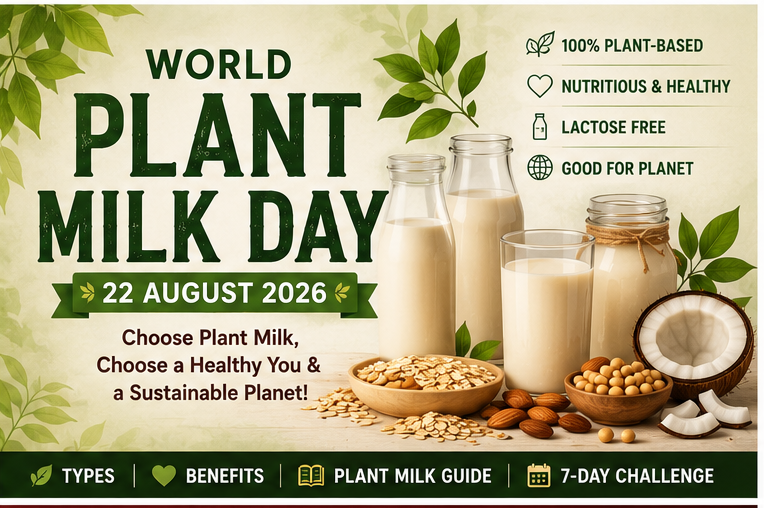
World Plant Milk Day falls on Saturday, 22 August 2026. The observance encourages people to learn about non-dairy beverage choices and try them in everyday foods such as tea, coffee, cereal, smoothies and cooking. For some people, plant-based beverages are chosen because of milk allergy, lactose intolerance, vegan preferences, taste, environmental concerns or simple curiosity. For others, dairy milk remains a suitable part of the diet. The goal of a useful guide is not to declare one choice universally “best,” but to help readers compare options intelligently.
The official World Plant Milk Day campaign promotes a seven-day challenge. You can treat that as a low-pressure experiment: try different types in familiar recipes, note taste and texture, read nutrition labels and decide which products actually fit your needs and budget.
What Is Plant Milk?
Plant milk is a common consumer term for beverages made from plant ingredients and water. Depending on the product, manufacturers may add vitamins, minerals, oils, stabilisers, flavouring or sweeteners. Common bases include legumes such as soy and pea, grains such as oat and rice, nuts such as almond and cashew, seeds such as flax or hemp, and coconut.
Two cartons that both say “oat beverage” can have very different calories, sugar, protein and fortification. That is why the front label is not enough. Always compare the Nutrition Facts or nutrition panel and ingredient list. If you use a plant beverage as a major replacement for dairy, nutrients such as protein, calcium, vitamin D, vitamin B12 and iodine may matter depending on the rest of your diet.
Popular Types of Plant Milk
1. Soy Milk
Fortified soy beverage is often one of the more protein-rich plant options. U.S. FDA guidance notes that fortified soy beverages are nutritionally similar enough to milk to be included in the dairy group under U.S. dietary guidance. This does not mean every soy product is identical; check added sugar, calcium, vitamin D and protein on the specific carton.
2. Oat Milk
Oat beverages are popular for their creamy texture and ability to foam in coffee. Protein is usually lower than soy and can vary by brand. Some products contain added oils or more carbohydrate, so compare labels if these factors matter to you. Unsweetened versions can be useful when you want more control over added sugar.
3. Almond Milk
Almond beverages are often light in texture and may work well in cereal, smoothies or cold drinks. Many are relatively low in protein, even though almonds themselves contain protein. Fortification levels differ by brand, and people with tree-nut allergy should avoid almond-based products.
4. Coconut Milk Beverage
Carton coconut beverages used as milk alternatives are different from thick canned coconut milk used in curries. They can have a distinctive flavour and may contain more saturated fat than some other plant beverages. Check the label based on how frequently you plan to use it.
5. Rice Milk
Rice beverages are generally mild and naturally sweet-tasting. They tend to be lower in protein than soy and may be higher in carbohydrate. They can be an option for people avoiding certain common allergens, but individual dietary needs still matter.
6. Pea Milk
Pea-protein beverages can provide more protein than many nut or grain-based alternatives. Taste and texture differ by brand. As always, compare fortification, sodium, added sugar and overall ingredient list.
7. Cashew, Seed and Mixed Plant Milks
Cashew, hemp, flax, sesame and blended beverages add variety. Mixed products can be designed for creaminess or higher protein, but there is no standard nutrient profile across the category. A short ingredient list may appeal to some shoppers, while others may prioritise fortification and protein.
How to Choose the Best Plant Milk for You
The FDA advises consumers to compare labels because plant-based milk alternatives can differ substantially from dairy milk and from one another. A practical shopping checklist is more useful than choosing based on marketing words like “natural,” “barista,” “premium” or “superfood.”
- Protein: If the beverage is replacing a meaningful source of protein in your diet, compare grams per serving.
- Calcium and vitamin D: Look for fortified products when these nutrients matter to your diet.
- Added sugar: Sweetened vanilla, chocolate and flavoured versions can contain more added sugar.
- Saturated fat: Compare if you consume several servings daily; coconut-based options may differ from oat, soy or almond.
- Allergens: Soy, tree nuts and sesame can be important allergens. Read labels carefully.
- Calories: “Plant-based” does not automatically mean low-calorie.
- Use case: A product that tastes great in coffee may not be your favourite for cooking or cereal.
- Price: Compare cost per serving, not only carton price.
Plant Milk vs Dairy Milk: Avoid the False Either-Or
Nutrition discussions online often turn into a competition where one side claims plant milk is always healthier and the other claims it has no value. Both extremes miss the point. Dairy milk and different plant beverages have different nutrient profiles. Some people need or prefer non-dairy choices; others comfortably consume dairy. A balanced choice considers the whole diet, age, allergies, medical conditions, ethics, taste and budget.
For infants and young children, beverage substitution deserves extra care. FDA guidance says plant-based beverages should not replace breast milk or infant formula before 12 months, and nutritional needs in toddlers are specific. Parents should follow paediatric or qualified dietitian guidance rather than relying on social-media trends. Pregnancy, kidney disease, food allergy or other medical conditions can also change what is appropriate.
7-Day Plant Milk Challenge – Easy Plan
You do not need to buy seven cartons. Choose two or three products in small packs and compare them across common uses.
- Day 1: Try an unsweetened option in your regular tea or coffee and note taste.
- Day 2: Use it with breakfast cereal, oats or muesli.
- Day 3: Make a banana, mango or seasonal-fruit smoothie without extra sugar.
- Day 4: Compare a second plant base—such as soy versus oat—using nutrition labels.
- Day 5: Use a plant beverage in a simple savoury recipe or soup where appropriate.
- Day 6: Test a cold drink such as iced coffee, cocoa or chia pudding.
- Day 7: Review taste, price, protein, fortification, added sugar and convenience, then choose whether any option deserves a regular place in your kitchen.
Easy Plant Milk Uses for Indian Homes
Plant beverages can work in overnight oats, porridge, smoothies, cold coffee, chia pudding, cereal and some baking recipes. In Indian kitchens, neutral unsweetened versions may also be tested in selected soups, sauces or desserts, but flavour can change the final dish. Coconut beverage can suit some tropical flavours, while soy or oat may be more neutral in other recipes.
For chai, heat stability matters. Some plant milks split when boiled aggressively or mixed with acidic ingredients. Barista-labelled versions are often formulated for better foaming, but they may contain extra oils or other ingredients. If your main use is chai, buy a small pack first and test it before stocking several cartons.
Is Plant Milk Better for the Environment?
Environmental impact depends on crop, farming practices, processing, packaging, transport, water use and the metric being measured. Broad lifecycle studies often find plant-based beverages can have lower environmental impacts than dairy on several measures, but impacts differ between soy, oat, almond, rice and other sources. For a consumer, practical sustainable habits also include reducing food waste, choosing a product you will actually finish, recycling packaging where facilities exist and avoiding unnecessary single-use purchases.
Rather than turning World Plant Milk Day into a purity test, use it as a chance to make one informed choice. Sustainability is strongest when a habit is realistic enough to continue.
Common Plant Milk Mistakes
- Assuming all plant milks have the same protein as dairy milk.
- Ignoring added sugar because the product looks “healthy.”
- Choosing a nut-based drink despite a relevant allergy.
- Assuming calcium is naturally present at the same level in every product.
- Using a beverage for a young child as a direct substitute without professional guidance.
- Buying a large pack before testing taste and cooking performance.
- Comparing brands by front-label claims instead of the nutrition panel.
Akshay Urja Diwas 2026 – Sustainable Energy Ideas
World Mosquito Day 2026 – Prevention & Awareness
World Photography Day 2026 – Creative Challenge Ideas
FAQ – World Plant Milk Day 2026
1. World Plant Milk Day 2026 kab hai?
It is observed on 22 August 2026.
2. World Plant Milk Day ka purpose kya hai?
The campaign encourages awareness and experimentation with plant-based beverage options, including an official seven-day challenge.
3. Kaunsa plant milk sabse healthy hai?
There is no single best choice for everyone. Compare protein, calcium, vitamin D, added sugar, saturated fat, allergens and your overall diet.
4. Protein ke liye kaunsa option useful hai?
Fortified soy and some pea-protein beverages often provide more protein than many almond, rice or oat products, but check the actual label.
5. Kya almond milk me dairy milk jitna protein hota hai?
Often no. Many almond beverages are relatively low in protein, so label comparison is important.
6. Kya plant milk lactose-free hota hai?
Plant-based beverages do not contain dairy lactose, but read the ingredient and allergen label for the specific product.
7. Kya plant milk children ko diya ja sakta hai?
Children have specific nutritional needs. Infants should not have these beverages as a replacement for breast milk or formula before 12 months, and parents should seek paediatric guidance for substitutions.
8. Chai ke liye best plant milk kaunsa hai?
Taste is personal. Oat, soy and barista-style products are commonly tested for tea and coffee, but heat stability and ingredients vary.
9. Unsweetened plant milk better hai?
Unsweetened versions help reduce added sugar, but the rest of the nutrient profile still matters.
10. Plant milk kharidte waqt sabse pehle kya dekhein?
Check the nutrition panel and ingredient list—especially protein, calcium, vitamin D, added sugar, saturated fat and allergens.
Conclusion
World Plant Milk Day 2026 on 22 August is a useful reason to experiment, not a reason to follow nutrition hype. Try one or two options, compare labels, test them in foods you already enjoy and decide what fits your taste, health needs and budget. If a plant beverage is replacing a major part of your diet—or is intended for a child—pay particular attention to nutrient adequacy and seek professional guidance when needed. An informed choice is better than choosing by trend alone.