World Mosquito Day 2026: 20 August History, Malaria Facts, Prevention Tips & School Activities
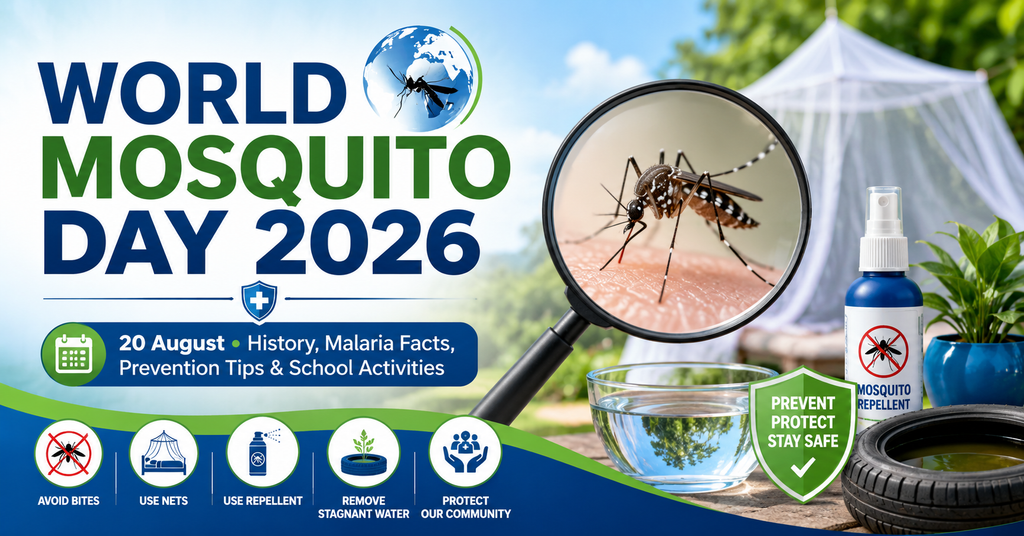
Direct Answer: World Mosquito Day har saal 20 August ko observe kiya jata hai. Ye date Sir Ronald Ross ki 1897 ki discovery ko yaad karti hai, jisne malaria transmission mein mosquitoes ki role ko establish karne mein major scientific contribution diya. 2026 mein is day ka practical message simple hai: mosquito-borne diseases ko lightly na lein, breeding sites kam karein, bites se protection lein aur fever ya concerning symptoms par timely medical advice lein.
World Mosquito Day 2026 kab hai?
World Mosquito Day 2026 Thursday, 20 August ko hai. Ye awareness day malaria ke history se strongly connected hai, lekin aaj iska scope malaria se aage dengue, chikungunya, Zika, yellow fever aur mosquito-borne infections ke broader prevention message tak pahunch chuka hai.
Mosquitoes chhote hote hain, lekin public health impact bahut bada ho sakta hai. Isliye awareness ka objective mosquitoes se fear create karna nahi, balki scientifically useful prevention habits ko daily routine ka part banana hai.
World Mosquito Day ka history
20 August 1897 ko British doctor Sir Ronald Ross ne malaria parasite aur mosquito transmission ke beech important scientific link par evidence develop kiya. Unke work ne malaria research aur vector control ko nayi direction di. Isi historical milestone ki memory mein 20 August ko World Mosquito Day ke roop mein observe kiya jata hai.
Modern malaria science kaafi advance ho chuki hai. Aaj hame pata hai ki malaria Plasmodium parasites se hota hai aur infected female Anopheles mosquito ke bite se spread hota hai. Malaria directly normal social contact se ek person se dusre person ko nahi lagta.
World Mosquito Day kyun important hai?
Monsoon aur humid climate wale regions mein mosquito breeding rapidly increase ho sakti hai. India jaise tropical country mein households, schools, workplaces aur local communities ki small prevention actions important role play karti hain. Open water containers, coolers, plant trays, discarded tyres, rooftop items aur clogged drains breeding opportunities create kar sakte hain.
Awareness ka second important part symptoms ko ignore na karna hai. Har fever malaria ya dengue nahi hota, aur self-diagnosis bhi reliable nahi hai. Lekin persistent ya high fever, severe weakness, repeated vomiting, breathing difficulty, confusion, bleeding, dehydration ya rapidly worsening symptoms mein prompt medical evaluation zaroori hai.
Malaria kaise spread hota hai?
Malaria infected female Anopheles mosquito ke bite se spread hota hai. Mosquito parasite ko infected person se acquire kar sakta hai aur baad mein dusre person tak transmit kar sakta hai. WHO malaria ko preventable aur curable disease batata hai, lekin timely diagnosis aur effective treatment bahut important hai.
Isliye malaria symptoms par random antibiotics, leftover medicines ya unverified home remedies use karne ke bajay qualified healthcare provider se testing aur treatment lena chahiye. Treatment choice local guidelines, patient age, pregnancy status, severity aur parasite type par depend kar sakti hai.
Mosquito-borne diseases ka simple difference
| Disease | Main mosquito vector | Key point |
|---|---|---|
| Malaria | Anopheles | Parasite-borne disease; timely testing important |
| Dengue | Aedes | Often daytime-biting vector; medical monitoring can be important |
| Chikungunya | Aedes | Fever with significant joint pain can occur |
| Zika | Aedes | Pregnancy-related risks make prevention especially important |
Ye table awareness ke liye hai, diagnosis ke liye nahi. Similar symptoms overlap kar sakte hain; laboratory testing aur clinician evaluation zaroori ho sakti hai.
Ghar par mosquito breeding kaise kam karein?
- Har week coolers, buckets, trays aur open containers check karein.
- Standing water ko empty, clean aur dry karein jahan possible ho.
- Water storage containers ko properly cover rakhein.
- Flower pot trays aur rooftop junk items mein paani collect na hone dein.
- Discarded tyres, bottles aur cans ko remove ya dry storage mein rakhein.
- Windows aur doors par screens ka use helpful ho sakta hai.
- Local authority ko blocked drain ya persistent waterlogging report karein.
- Community cleaning drive mein safe participation karein.
20-minute monsoon home audit
World Mosquito Day ko ek practical family activity banaya ja sakta hai. Timer 20 minutes ka set karein aur house ko four zones mein check karein: kitchen/bathroom utility area, balcony/garden, rooftop/parking aur water-storage area. Har zone mein dekhein ki kahin uncovered bucket, cooler tray, plant saucer, old container, tyre, tarpaulin fold ya drain ke aas-paas paani to collect nahi ho raha.
Jo container use nahi hota use ulta karke dry store karein. Jo water storage necessary hai use lid se cover karein. Cooler ko manufacturer guidance ke hisaab se regularly clean karein. Society common area mein issue ho to maintenance team ko photo aur exact location ke saath report karna verbal complaint se zyada actionable ho sakta hai. Children ko cleaning chemicals, drains, rooftops ya unsafe ladders handle na karne dein; unki role simple checklist marking tak rakhein.
Mosquito bites se personal protection
Long sleeves, full-length clothing, mosquito nets aur approved repellents bite exposure reduce karne mein help kar sakte hain. Product label directions follow karna important hai, especially children, pregnancy ya sensitive skin ke cases mein. Repellent ko eyes, mouth ya damaged skin par direct apply na karein unless label specifically allow karta ho.
Sleeping areas mein mosquito nets useful ho sakte hain, particularly malaria-risk settings mein. WHO long-lasting insecticide-treated nets ko malaria prevention tools mein count karta hai. Local public health programmes ke instructions ko follow karna best hai.
Kab medical care jaldi leni chahiye?
Fever ke saath severe weakness, repeated vomiting, breathing difficulty, confusion, fainting, unusual bleeding, severe abdominal pain, inability to drink fluids, very low urine output ya rapidly worsening condition ho to urgent medical evaluation lein. Infants, older adults, pregnant people aur chronic illness wale patients mein lower threshold par professional advice lena sensible hota hai. Emergency symptoms mein nearby emergency service ya hospital ko contact karein.
Ye article diagnosis ya treatment prescription nahi hai. Malaria, dengue aur other infections ke symptoms overlap kar sakte hain, isliye test aur clinician assessment important ho sakte hain. Aspirin, antibiotics, antimalarial medicines ya steroids ko self-start na karein unless qualified clinician ne advise kiya ho.
School aur college activities for World Mosquito Day
- 5-minute awareness talk: breeding sites aur prevention par simple presentation.
- Poster competition: “No Standing Water, Fewer Mosquitoes” theme.
- Campus inspection: teacher supervision mein stagnant water spots identify karna.
- Science activity: mosquito life cycle ka chart banana, live breeding experiment avoid karna.
- Quiz: malaria, dengue aur mosquito habits par fact-based questions.
- Community message: parents ke liye one-page prevention checklist.
Students ko live mosquitoes collect, breed ya handle karne ke liye encourage nahi karna chahiye. Awareness activity safe classroom material tak limited honi chahiye.
Office aur society ke liye 10-minute checklist
Apartment societies aur offices weekly “dry day” habit adopt kar sakte hain: roof, parking, garden, coolers, AC drain trays aur water storage points ko inspect karna. Maintenance team ko leakage aur clogged drainage ka written checklist dena useful hota hai. Fogging ko single permanent solution na samjhein; breeding-source reduction aur public-health guidance equally important hai.
Kya avoid karein?
- Unknown pesticide ko excessive indoor spray na karein.
- Children ko insecticide concentrates handle na karne dein.
- Live larvae breeding ko school experiment ke naam par maintain na karein.
- High fever ko sirf “seasonal” kehkar days tak ignore na karein.
- Social media par miracle cure ya unverified mosquito remedies forward na karein.
Common myths
Myth 1: Har mosquito malaria spread karta hai.
Nahi. Malaria specific infected female Anopheles mosquitoes se spread hota hai.
Myth 2: Clean-looking water safe hai.
Mosquitoes different types ke standing water mein breed kar sakte hain. Sirf water clean dikhne se risk zero nahi hota.
Myth 3: Sirf raat ko mosquito bite important hai.
Different mosquito species different times par active ho sakti hain. Aedes mosquitoes often daytime biting ke liye known hain.
Myth 4: Ek baar spray kar diya to problem khatam.
Breeding sites wapas ban sakte hain. Regular source reduction zaroori hai.
World Mosquito Day slogans
Stop standing water before mosquitoes start growing.
Small weekly checks can prevent big mosquito problems.
Cover water, clear clutter, protect your family.
Mosquito awareness starts at home.
Prevent bites, reduce breeding, stay alert.
A cleaner neighbourhood means fewer breeding spots.
Fight the breeding site, not just the flying mosquito.
Every dry container is one less mosquito nursery.
Science, prevention and community action save lives.
World Mosquito Day: awareness today, safer communities tomorrow.
FAQ – World Mosquito Day 2026
1. World Mosquito Day 2026 kab hai?
20 August 2026 ko.
2. World Mosquito Day 20 August ko kyun hota hai?
Ye Sir Ronald Ross ke 1897 malaria-mosquito discovery milestone ko commemorate karta hai.
3. Malaria kaise spread hota hai?
Infected female Anopheles mosquito ke bite se malaria parasites humans tak pahunch sakte hain.
4. Kya malaria person-to-person touch se spread hota hai?
Normal social contact se nahi; malaria primarily infected mosquito bites se transmit hota hai.
5. Ghar mein sabse useful prevention habit kya hai?
Standing water ko regularly remove ya cover karna aur breeding spots inspect karna.
6. Kya mosquito net useful hai?
Haan, especially malaria-risk areas mein mosquito nets important protective tool ho sakte hain.
7. Kya repellent children par use kar sakte hain?
Age-appropriate approved product ka label follow karein; doubts mein pediatrician ya pharmacist se poochhein.
8. Fever mein kya karein?
Persistent, high ya worsening fever mein medical evaluation lein; self-diagnosis avoid karein.
9. School activity mein live larvae collect karna chahiye?
Nahi. Safe posters, charts aur supervised campus inspection better options hain.
10. World Mosquito Day sirf malaria ke baare mein hai?
Historical connection malaria se hai, lekin modern awareness broader mosquito-borne disease prevention ko bhi support karti hai.
Conclusion
World Mosquito Day 2026 hame yaad dilata hai ki prevention complicated hona zaroori nahi. Weekly water checks, covered storage, safe bite protection, community cleanliness aur timely medical care powerful basics hain. Awareness ka best result tab milta hai jab households, schools, workplaces aur local authorities ek consistent routine follow karein.