
World Calligraphy Day 2026: Beginner Practice Ideas, Lettering Tips & Creative Activities
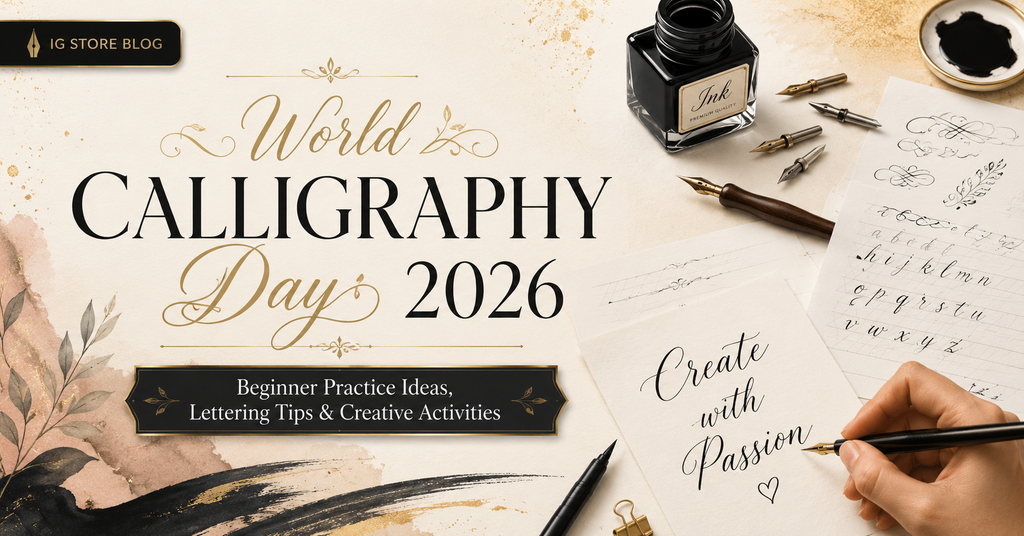
World Calligraphy Day 2026 is Wednesday, August 12. It is a good excuse to slow down, put pen to paper, and explore expressive lettering—whether you are practicing traditional calligraphy, modern brush lettering, or simply trying to make your everyday handwriting more deliberate.
You do not need professional tools to begin. A comfortable pen, unlined or lightly ruled paper, and 15 focused minutes are enough for a first session.
What Is World Calligraphy Day?
World Calligraphy Day celebrates the art and craft of beautiful, intentional writing. Calligraphy appears across cultures and writing traditions, and modern lettering communities continue to adapt the craft for cards, journals, art prints, invitations, signs, and personal creative practice.
For beginners, the most useful way to approach the day is not to chase perfect letters. Focus on rhythm, spacing, pressure, and consistent shapes.
When Is World Calligraphy Day 2026?
World Calligraphy Day 2026 falls on Wednesday, August 12. The observance is an opportunity for artists, students, stationery lovers, and curious beginners to spend time with hand lettering.
What Do You Need to Start Calligraphy?
Traditional styles can use specialized nibs and ink, while modern lettering may use brush pens or markers. But a beginner can learn many foundational ideas with an ordinary pen or pencil.
- A pen or pencil that feels comfortable.
- Smooth practice paper.
- A ruler for guidelines if needed.
- A reference alphabet for the style you want to study.
- Enough desk space to move your hand freely.
Start with what you have. Specialized tools make more sense after you understand which lettering style you enjoy.
10 Beginner Calligraphy Practice Ideas
1. Fill a page with basic strokes
Practice straight lines, curves, ovals, loops, and repeated arches. Letterforms become easier when the component movements feel familiar.
2. Slow down your writing
Calligraphy is drawing letters with intention. Write at half your normal speed and pay attention to where each stroke begins and ends.
3. Practice one lowercase letter family
Group letters with similar shapes instead of moving alphabetically. For example, practice rounded forms together so your hand repeats related motions.
4. Write your name five different ways
Your own name is familiar enough that you can focus on style. Try a simple print version, a connected script, a taller version, a compact version, and one with decorative flourishes.
5. Copy a short favorite phrase
Choose a phrase of three to seven words. Short text lets you practice spacing and composition without turning the session into a long project.
6. Make an alphabet sampler
Create one page showing A through Z in a consistent style. Date the page so you can compare it with a new sampler a month later.
7. Practice spacing before decoration
Beautiful individual letters can still be difficult to read when spacing is inconsistent. Work on the gaps between letters and words before adding flourishes.
8. Create a handwritten bookmark
Cut sturdy paper to bookmark size and letter a short phrase, name, or reading reminder. If books are part of your creative downtime, see our National Book Lovers Day ideas.
9. Letter a simple card
Write “thank you,” “happy birthday,” “congratulations,” or another short greeting. Cards provide a practical reason to practice clean layout.
10. Repeat the same word for 10 minutes
Choose a word with varied shapes, such as “create,” “balance,” or “beautiful.” Repetition makes small inconsistencies easier to notice.
A 15-Minute Calligraphy Practice Routine
Minutes 1–3: warm up with lines, curves, ovals, and loops.
Minutes 4–7: practice two or three letters that share similar strokes.
Minutes 8–11: combine those letters into short words.
Minutes 12–14: write one phrase slowly and focus on spacing.
Minute 15: circle one thing that improved and one thing to practice next time.
This short routine is more sustainable than waiting for a free afternoon. Regular practice gives your hand repeated exposure to the same movements.
Common Beginner Calligraphy Mistakes
Trying to write too fast
Speed usually hides shape and spacing problems. Slow movements give you time to control each stroke.
Using too many styles at once
Pick one basic alphabet and practice it consistently before mixing scripts, flourishes, shadows, and decorative effects.
Pressing too hard
Excess pressure can make the hand tense and damage some pen tips. Use the amount of pressure appropriate for your tool.
Ignoring posture and paper position
Move the paper until the writing angle feels natural. Keep shoulders relaxed and give your forearm room to move.
Comparing practice sheets to finished artwork
Finished lettering online often represents years of practice. Compare today's page with your own earlier work instead.
Creative World Calligraphy Day Activities
- Write a handwritten note to a friend or family member.
- Create name cards for a dinner or study group.
- Design a one-page alphabet poster.
- Letter a favorite book quote for personal use.
- Start a handwriting practice journal.
- Teach a child how to make decorative initials.
- Compare lettering styles from different historical periods and cultures.
If you want a quiet creative day at home, combine lettering with the low-pressure ideas in our National Lazy Day relaxation guide.
Calligraphy Captions for August 12
Slow strokes, quiet mind, one beautiful letter at a time.
Putting the screen down and the pen to paper. ✍️
World Calligraphy Day: practice progress, not perfection.
Letters can be useful and still be art.
Today’s creative plan: ink, paper, patience.
Calligraphy Ideas for Students
Students can use lettering practice for notebook headings, project title pages, flash-card labels, bookmarks, and handmade cards. Keep readability first. Decorative lettering works best for short headings; regular handwriting is usually better for long notes.
As US students return to school, our Back-to-School 2026 guide has first-day encouragement and messages that can also inspire short lettering practice phrases.
FAQs About World Calligraphy Day 2026
When is World Calligraphy Day 2026?
World Calligraphy Day 2026 is Wednesday, August 12.
Can beginners celebrate World Calligraphy Day?
Absolutely. The day is a good opportunity to try basic strokes, lettering exercises, or a handwritten card for the first time.
Do I need a calligraphy pen?
No. Specialized tools are useful for specific styles, but basic spacing, rhythm, letter shape, and composition can be practiced with an ordinary pen or pencil.
How long should a beginner practice calligraphy?
Even 10 to 15 focused minutes can be useful. Consistent short sessions are often easier to maintain than occasional long ones.
What should I practice first?
Begin with simple strokes and repeated shapes, then move to related lowercase letters and short words.
Is calligraphy the same as handwriting?
They overlap, but calligraphy generally involves more deliberate construction and styling of letterforms, while everyday handwriting prioritizes efficient communication.
What is an easy calligraphy project?
A bookmark, greeting card, name card, short quote page, or alphabet sampler is manageable for a beginner.
Final Thought
World Calligraphy Day is a useful reminder that creativity can be small and accessible. You do not need a studio, a large budget, or perfect handwriting. Choose one pen, one page, and one short practice goal. The value is in paying attention to the movement and enjoying the gradual improvement.